
This post looks at the Education of Sylvia Plath for the spring semester, 1954, and at the courses she took at Harvard Summer School, 1954. Sylvia Plath returned to Smith College for the second semester of the 1953-1954 academic year. She resumed living in Lawrence House and during the spring had her own room (it was the same room she lived in the previous year, 1952-1953, but she had no roommate). It is unknown what courses Plath had signed up to take when decisions were made in the spring of 1953. It might be that the courses she took in the Spring of 1954 were among them; but it might also be that she was experimental.

Plath officially took three courses:
English 321b, American Fiction 1830-1900: Hawthorne, Poe, Melville, and James. M T W 9. Newton Arvin.
Russian 35b,Tolstoy and Dostoevsky: M T W 12. George Gibian.
History 38b, Intellectual History of Europe in the Nineteenth Century: Main trends of thought in their relation to the political, social, and economic background. M T W 11. Elisabeth Koffka.
In addition to the above, Plath audited:
English 417b, The Twentieth Century American Novel: Th F S 10. Robert Gorham Davis.
Plath attended Harvard Summer School in July and August 1954 and sublet an apartment at 1572 Massachusetts Avenue, Cambridge, Mass., with three other girls. I do not believe there are notebooks for these courses, or papers. There are no known journals for this time period, either. However, the summer was recorded meticulously by Plath in a pocket calendar and in review in her Smith College scrapbook, both held in Plath mss II by the Lilly Library at Indiana University.
The only course Plath officially took at Harvard Summer School was German S-Bab (=11).
German S-Bab. Elementary German: Aural-Oral Approach.
Full course (8 units). 8-9 and 11-12 a.m.
For students who have had no German. Although attention is devoted to speaking and understanding the spoken language, the emphasis is on developing skill in reading. All students planning to enroll in this course who have studied the language previously are required to take the Placement Test given before the beginning of the course.
Dr. James M. Hawkes, Groton School; and others.
Harvard and Radcliffe degree candidates cannot count German S-Bab in addition to German A, B, or the first half of BC.
Information above taken from Summer School Catalogue course description (HU 75.25, 1954-55, p. 78). The Harvard University Archives also holds the Final Exam (HUE 554.4) for this course.
However, she also sat in on classes for a course in the Nineteenth Century Novel.
English S-151. The Nineteenth-Century Novel
Half-course (4 units). 12-1 p.m.
The nineteenth-century novel considered as the characteristic art of the European middle classes. Among the writers to be studied are Jane Austen, Stendhal, Balzac, Dickens, Flaubert, Turgenev, Tolstoy, and Trollope.
Mr. Frank O'Connor, writer.
Harvard and Radcliffe candidates cannot count English S-151 in addition to English 151.
Information above taken from Summer School Catalogue course description (HU 75.25, 1954-55, p. 68). The Harvard University Archives also holds the Reading List (Call number HUE 83.554.6) and Final Exam (HUE 554.4) for this course.
The reading list is wonderful:
Background: Lord David Cecil, Early Victorian Novelists
Novels: Jane Austen: Emma, Pride and Prejudice
Stendhal: The Charterhouse of Parma
Balzac: Eugenie Grandet
Dickens: Bleak House
Trollope: The Last Chronicle of Barset, Phineas Finn
Flaubert: Madame Bovary
Tolstoy: The Cossacks
Turgenev: On the Eve
Mark Twain: Huckleberry Finn
 Plath took advantage of her situation in Cambridge with easy access to all of Harvard, Boston, and made frequent visits home to Wellesley. Plath also visited north shore Massachusetts beaches, Cape Cod, Newport, Rhode Island, and New Hampshire.
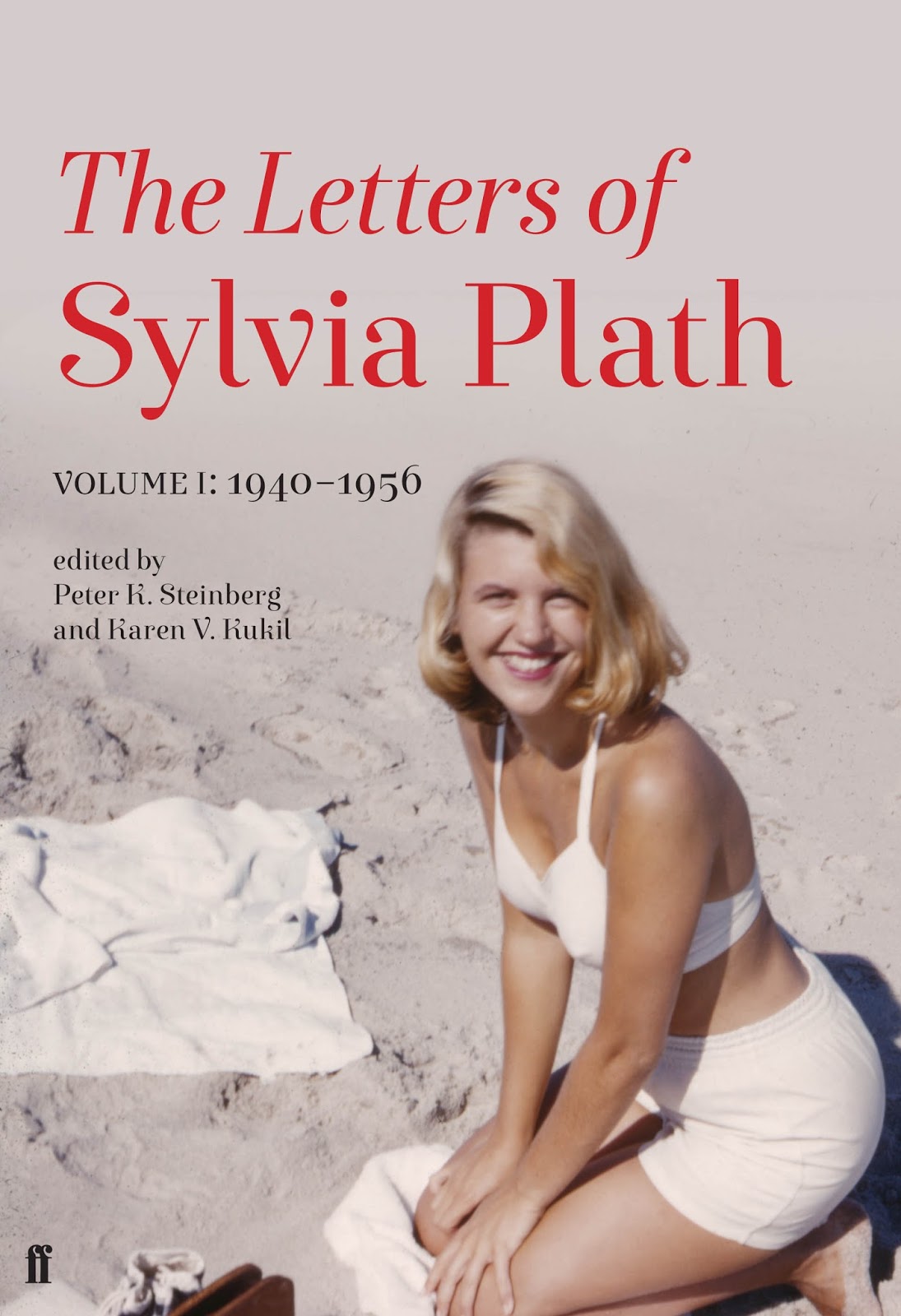
On 24 July 1954, Plath went to Chatham with Gordon Lameyer who took the now very famous color photographs of Plath in her "a neat two-piece white Jantzen bathing suit" (Letters of Sylvia Plath, p. 314). One such photo resplendently graces the recently published Faber edition of volume 1 of Plath's letters. Sylvia Plath in full color, both inside and out.
Two days later, on Monday 26 July 1954, Plath was photographed in Widener Library by the Boston Globe. The photograph appeared the following day under the article titled "More Girls Than Ever At Harvard Summer School". You can read a little more about some of Plath's experiences at Harvard School School in this post.


See the other posts in the Education of Sylvia Plath series: 1950-1951; 1951-1952; 1952-1953; and 1954-1955.
All links accessed 1 October and 1, 7 December 2017.

Plath officially took three courses:
English 321b, American Fiction 1830-1900: Hawthorne, Poe, Melville, and James. M T W 9. Newton Arvin.
Russian 35b,Tolstoy and Dostoevsky: M T W 12. George Gibian.
History 38b, Intellectual History of Europe in the Nineteenth Century: Main trends of thought in their relation to the political, social, and economic background. M T W 11. Elisabeth Koffka.
In addition to the above, Plath audited:
English 417b, The Twentieth Century American Novel: Th F S 10. Robert Gorham Davis.
Plath attended Harvard Summer School in July and August 1954 and sublet an apartment at 1572 Massachusetts Avenue, Cambridge, Mass., with three other girls. I do not believe there are notebooks for these courses, or papers. There are no known journals for this time period, either. However, the summer was recorded meticulously by Plath in a pocket calendar and in review in her Smith College scrapbook, both held in Plath mss II by the Lilly Library at Indiana University.
 |
| Bay State Apartments, 1572 Massachusetts Avenue, Cambridge |
German S-Bab. Elementary German: Aural-Oral Approach.
Full course (8 units). 8-9 and 11-12 a.m.
For students who have had no German. Although attention is devoted to speaking and understanding the spoken language, the emphasis is on developing skill in reading. All students planning to enroll in this course who have studied the language previously are required to take the Placement Test given before the beginning of the course.
Dr. James M. Hawkes, Groton School; and others.
Harvard and Radcliffe degree candidates cannot count German S-Bab in addition to German A, B, or the first half of BC.
Information above taken from Summer School Catalogue course description (HU 75.25, 1954-55, p. 78). The Harvard University Archives also holds the Final Exam (HUE 554.4) for this course.
However, she also sat in on classes for a course in the Nineteenth Century Novel.
English S-151. The Nineteenth-Century Novel
Half-course (4 units). 12-1 p.m.
The nineteenth-century novel considered as the characteristic art of the European middle classes. Among the writers to be studied are Jane Austen, Stendhal, Balzac, Dickens, Flaubert, Turgenev, Tolstoy, and Trollope.
Mr. Frank O'Connor, writer.
Harvard and Radcliffe candidates cannot count English S-151 in addition to English 151.
Information above taken from Summer School Catalogue course description (HU 75.25, 1954-55, p. 68). The Harvard University Archives also holds the Reading List (Call number HUE 83.554.6) and Final Exam (HUE 554.4) for this course.
The reading list is wonderful:
Background: Lord David Cecil, Early Victorian Novelists
Novels: Jane Austen: Emma, Pride and Prejudice
Stendhal: The Charterhouse of Parma
Balzac: Eugenie Grandet
Dickens: Bleak House
Trollope: The Last Chronicle of Barset, Phineas Finn
Flaubert: Madame Bovary
Tolstoy: The Cossacks
Turgenev: On the Eve
Mark Twain: Huckleberry Finn
 Plath took advantage of her situation in Cambridge with easy access to all of Harvard, Boston, and made frequent visits home to Wellesley. Plath also visited north shore Massachusetts beaches, Cape Cod, Newport, Rhode Island, and New Hampshire.
On 24 July 1954, Plath went to Chatham with Gordon Lameyer who took the now very famous color photographs of Plath in her "a neat two-piece white Jantzen bathing suit" (Letters of Sylvia Plath, p. 314). One such photo resplendently graces the recently published Faber edition of volume 1 of Plath's letters. Sylvia Plath in full color, both inside and out.
Two days later, on Monday 26 July 1954, Plath was photographed in Widener Library by the Boston Globe. The photograph appeared the following day under the article titled "More Girls Than Ever At Harvard Summer School". You can read a little more about some of Plath's experiences at Harvard School School in this post.


See the other posts in the Education of Sylvia Plath series: 1950-1951; 1951-1952; 1952-1953; and 1954-1955.
All links accessed 1 October and 1, 7 December 2017.